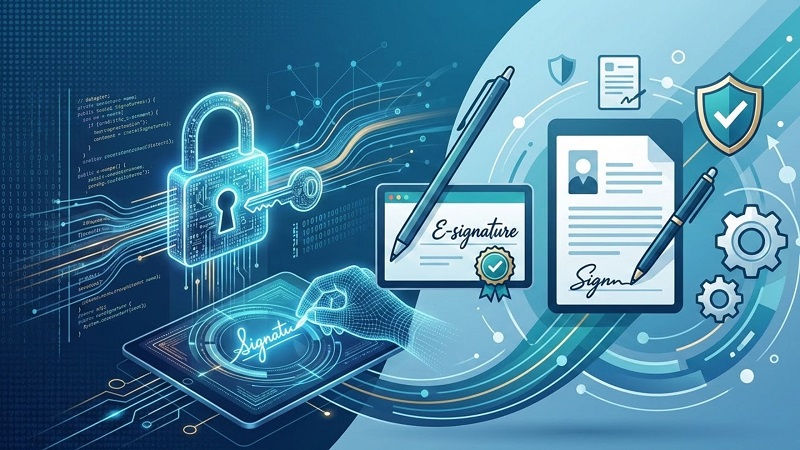
For many organizations, signing technology is treated as an operational detail. In reality, it is a governance decision. The choice between digital signatures and electronic signatures directly affects legal defensibility, cybersecurity posture, audit readiness, and workflow speed.
Leaders who treat these methods as interchangeable often expose their organizations to unnecessary risk.
The real question is not which option is “better.” It is which method aligns with your risk profile, regulatory exposure, and operational model.
Understanding the Terminology
At a high level, an electronic signature is any electronic method that indicates acceptance of an agreement.
This may include:
- Typing a name into a form
- Clicking “I agree”
- Drawing a signature with a cursor or finger
- Pasting a scanned image of a signature
Its purpose is to capture intent
A digital signature, by contrast, is a specific technical implementation that uses cryptographic technology to bind a signer’s identity to a document. It relies on encryption keys and certificate-based authentication to create tamper-evident protection.
The confusion in the digital signature vs electronic signature discussion is more than semantic. When organizations misunderstand the distinction between a digital signature and an electronic signature, they may assume they have cryptographic protection when they only have intent capture. That gap can become visible during audits, disputes, or regulatory reviews.
For executives, clarity here prevents legal exposure and avoids overengineering simple workflows.
Comparing Protection Models
The central difference lies in how each method protects integrity and authenticity.
Electronic signatures confirm that a user intended to sign. However, their security model varies depending on the platform, identity verification process, and audit logging capabilities. Some implementations offer robust tracking, while others rely primarily on access controls and timestamps.
Digital signatures introduce cryptographic assurance. They use public key infrastructure (PKI) to:
- Authenticate the signer’s identity through digital certificates
- Detect document alterations after signing
- Provide strong non-repudiation
- Create verifiable audit trails
If the document is modified after signing, the signature becomes invalid. This tamper-evidence is critical in high-risk environments.
When does this distinction matter most?
- High-value commercial contracts
- Regulated financial transactions
- Healthcare records
- Government filings
- Cross-border agreements
In these contexts, integrity and non-repudiation are not optional safeguards. They are operational requirements.
However, not every use case demands the highest level of cryptographic control. Internal HR acknowledgments, low-risk vendor onboarding, or routine approvals may function efficiently with simpler mechanisms.
Security should scale with risk. Over-securing low-risk workflows can reduce adoption and create friction without meaningful benefit.
Legal and Regulatory Implications Across Industries
The legal standing of signing methods varies by jurisdiction and industry.
In the United States, frameworks such as Electronic Signatures in Global and National Commerce Act (ESIGN) and Uniform Electronic Transactions Act (UETA) broadly recognize electronic signatures as legally valid, provided certain conditions are met.
In the European Union, eIDAS Regulation establishes a tiered model:
- Simple electronic signatures
- Advanced electronic signatures
- Qualified electronic signatures
Under this framework, higher levels introduce stricter identity verification and technical controls. Qualified signatures, in particular, carry strong legal presumption of validity across EU member states.
Sector-specific regulations add further complexity:
- Financial services often require strong authentication and traceability.
- Healthcare regulations emphasize data integrity and patient privacy.
- Government procurement may mandate advanced or qualified mechanisms.
Cross-border agreements introduce additional risk. What is sufficient in one jurisdiction may not meet evidentiary standards in another.
For multinational organizations, standardizing on stronger cryptographic methods can reduce uncertainty, especially in regulated sectors. For smaller or domestic operations, a risk-based tiered approach may be more practical.
A Practical Decision Framework
When evaluating signing methods, decision makers should consider five questions:
- What is the financial and reputational impact if this agreement is challenged?
- Is the document subject to regulatory oversight?
- Does the agreement cross jurisdictional boundaries?
- How important is tamper detection?
- What level of user friction is acceptable?
If the document carries high financial exposure, regulatory scrutiny, or cross-border implications, stronger cryptographic controls are advisable.
If the agreement is routine, low risk, and internal, simpler mechanisms may be operationally sufficient.
The goal is alignment. The right choice balances risk tolerance, compliance requirements, cost, and user experience.
Risk, Cost, and Operational Impact
Every signing method carries trade-offs.
Electronic methods are typically:
- Faster to deploy
- Easier for users
- Lower cost to implement
- Sufficient for many everyday agreements
Cryptographic approaches typically provide:
- Higher evidentiary strength
- Tamper-evidence
- Strong identity binding
- Greater regulatory defensibility
However, they may require:
- Certificate management
- Integration with identity infrastructure
- Additional onboarding steps
The most mature organizations avoid a binary mindset. They define tiers. Low-risk workflows use streamlined methods. High-risk workflows use certificate-backed protection.
This structured approach reduces legal ambiguity without slowing business operations.
Why This Distinction Matters Strategically
Treating signing technology as interchangeable can create hidden vulnerabilities. A typed name may be legally valid, but it may not provide sufficient evidence in a dispute involving millions of dollars.
On the other hand, mandating cryptographic controls for every internal approval can reduce productivity and create unnecessary complexity.
The strategic objective is not maximum security. It is appropriate security.
Organizations that align signing methods with risk exposure strengthen legal defensibility, improve audit readiness, and preserve workflow efficiency.
FAQs:
1. Is a typed name enough for a vendor contract?
It depends on the contract’s risk profile and jurisdiction. For low-value, domestic agreements, a simple electronic method may be legally valid. For high-value or cross-border contracts, stronger identity verification and tamper-evidence may be advisable to reduce dispute risk.
2. Do regulated industries always require cryptographic signing methods?
Not always, but they often require stronger identity assurance and auditability. Financial services, healthcare, and public sector environments frequently benefit from advanced or certificate-based approaches due to compliance obligations and evidentiary standards.
3. How do signing methods affect workflow efficiency?
Simpler methods typically reduce friction and increase adoption. More secure implementations may introduce additional verification steps. The key is matching the method to the workflow’s risk level so security enhances governance without disrupting operations.