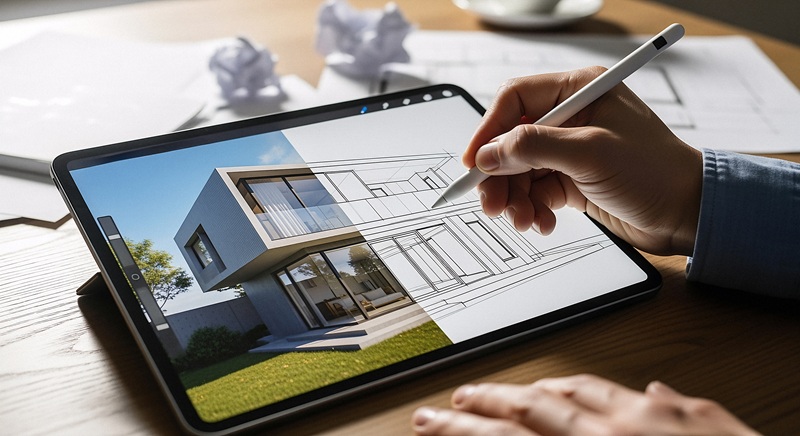
Project managers rarely panic because a render looks a little less dramatic than expected. They panic when approvals slip, a meeting deck needs a last-minute update, and the vendor disappears into silence. In that moment, the right rendering company feels less like an art supplier and more like a delivery partner. Strong 3d architect rendering work is still a creative service, but on live architecture and development jobs it also has to behave like disciplined project operations. That is the idea behind this reliability ranking. It looks past flashy portfolios and asks a harder question: which studios show public signs of structured communication, controlled revisions, and repeatable delivery habits? For teams trying to avoid rework, budget creep, and awkward client calls, those traits are not a bonus. They are the product.
The architectural visualization market is crowded, and on the surface many studios can produce polished images. The problem starts after the first wow moment. A beautiful sample does not tell you how a team handles scope changes, whether feedback is organized, or how fast they recover when a client asks for a major adjustment before a board presentation. That gap matters because rendering packages often sit inside much larger design, sales, and construction timelines.[Text Wrapping Break][Text Wrapping Break] Industry data helps explain why project leads are paying closer attention to the process. PMI reported an average project performance rate of 73.8% across respondents in its 2024 Pulse of the Profession research, which is good but hardly perfect, and 64% of senior leaders said their teams need new technical skills. In parallel, a 2024/25 Chaos and Architizer study of 1,100+ architects and designers found that 85% occasionally or regularly receive requests to revise visualization work. That puts pressure on every 3d rendering for an architect’s workflow. If you choose a studio only because it is cheap or visually trendy, you may be buying uncertainty disguised as value.
Establishing A Standard For Reliability
Why 3D Architect Rendering Needs A Process Layer
A reliable partner is not just a talented image maker with a good eye for atmosphere. It is a team that can absorb input, translate it into action, and keep a moving project legible for everyone involved. That is the line between a freelancer-style supplier and a studio that behaves like an extension of a professional design organization. Public signs of discipline matter more than vague claims about passion.[Text Wrapping Break][Text Wrapping Break] For this article, I treated reliability as an editorial standard built on operational evidence visible from public materials, team structure, and workflow language. The list below shows the signals that matter most when judging whether a studio is ready for demanding client work rather than isolated visuals.
· Named project or account ownership, so someone is clearly responsible for communication and next steps.
· A defined revision method, with approval stages that reduce version chaos and stop feedback from scattering across channels.
· Visible production depth, such as producers, art directors, project managers, or key account roles beyond the artists themselves.
· Proof of repeatable delivery across markets, project types, and stakeholder groups, rather than one-off portfolio pieces.
That framework also explains why pure aesthetics are not enough. Great architecture rendering can still become a bad business decision if the workflow around it is loose. And once deadlines tighten, clarity usually beats style experiments.
Cylind – The Benchmark For Process Transparency
3D rendering company Cylind stands out because it speaks about workflow in unusually direct terms. On its public process pages, the studio says each exterior rendering project is managed by a project manager who monitors deadlines and ensures communication, and it also states that clients are given up to three rounds of revisions. That may sound simple, but simple is useful. A project lead can immediately understand the rules of engagement, how feedback moves, and where control sits.[Text Wrapping Break][Text Wrapping Break]There is another reason that matters. Cylind presents itself as active across the U.S., Europe, and other regions, and its client-facing language keeps returning to timeliness, communication, and structured delivery instead of only mood and photorealism. That is a good signal. For teams buying architectural renderings for sales, approvals, or investor communication, predictability is often more valuable than artistic drama. Cylind feels built for buyers who want fewer surprises, cleaner handoffs, and a studio that treats schedule discipline as part of the service, not as a polite afterthought.
The Boundary – Precision And Architectural Integrity
The Boundary earns its place because its public footprint suggests a mature, high-accountability operation. Founded in 2014, with visible offices in London, New York City, and Auckland, the studio is clearly set up for international coordination. Its portfolio also leans toward premium, large-scale work, including city-scale digital twins, luxury developments, and major marketing platforms. That kind of exposure usually forces rigor. Large clients do not tolerate foggy revision cycles for long.[Text Wrapping Break][Text Wrapping Break] What makes the case stronger is the company’s own hiring language. A recent client service role described work that includes coordinating communications, documentation, scheduling, and accurate tracking of project actions and client requests. That is not decorative language. It points to a studio that treats delivery as managed infrastructure. For firms buying visualization support on high-stakes developments, that matters. The Boundary looks less like a loose collection of artists and more like a structured visualization business that understands accountability, documentation, and the pressure of real project calendars.
Brick Visual – Scalability And Technical Structure
Brick Visual is the strongest example here of scale supported by visible internal structure. Publicly, the company describes itself as an international creative production studio founded in 2012, with nearly 100 professionals from 24 countries and a client experience team that includes project managers, executive producers, creative directors, art directors, and regional key account managers. That is not a boutique setup trying to act large. It is already large, and it shows.[Text Wrapping Break][Text Wrapping Break] That depth matters when project volume rises or when several stakeholders are reviewing work at once. Multi-phase developments do not only need pretty images; they need stable coordination between briefing, production, review, and final release. Brick’s language around accelerating design processes and maintaining personal contact suggests an operation designed to keep moving under pressure. For architecture firms with fluctuating workloads, that kind of visualization work becomes easier to buy when the studio itself looks scalable. Brick Visual gives that impression. It feels like a partner built to absorb complexity without making the client babysit the process.
Conclusion
The old way of choosing a visualization vendor was simple: open the portfolio, compare styles, and pick the team with the nicest images at a price you could defend. That is no longer enough. Rendering now sits too close to approvals, financing, marketing, and contractor coordination to be treated as a purely artistic purchase. The better question is whether a studio can keep the work moving when feedback gets messy, and deadlines stop being polite.[Text Wrapping Break][Text Wrapping Break] That is why reliability deserves its own ranking logic. PMI’s 2025 research showed that stronger business acumen correlates with better schedule adherence at 63% versus 59%, and better budget adherence at 73% versus 68%. The lesson carries over here. Process quality changes outcomes. In this field, the safest partner is the one that can make decisions visible, revisions controllable, and expectations clear. Done right, 3d architecture rendering protects time, money, and trust. In the long run, 3d architect rendering is most valuable when it behaves like managed delivery, not creative chaos.