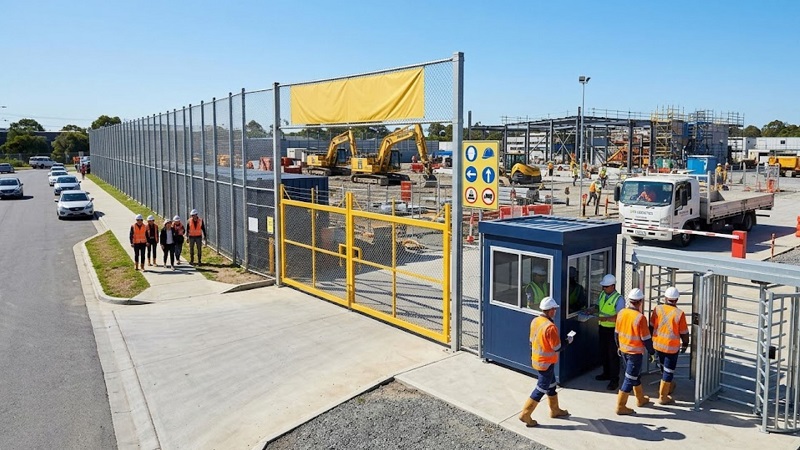
Controlling who enters and exits a site is one of the most important aspects of site management. Whether it’s a construction project, infrastructure upgrade or large-scale event, unrestricted access can create safety risks, security concerns and operational delays. Effective perimeter barriers help establish clear boundaries while supporting a safer and more organized working environment.
The challenge is not simply installing barriers around a site. Successful access control requires planning, ongoing monitoring and procedures that can adapt as site conditions change.
Start with a clear access plan
Before barriers are installed, site managers should identify exactly who needs access and when. Employees, contractors, delivery drivers, visitors, and inspectors often have different access requirements. Understanding these needs from the outset helps prevent confusion and reduces the likelihood of unauthorized entry.
It’s also important to consider how people and vehicles move around the site. Separating pedestrian routes can significantly reduce safety risks. During busy periods, such as shift changes or scheduled deliveries, designated entry and exit procedures help maintain order and minimize congestion.
Limit and control entry points
A common mistake is creating too many access locations. While multiple gates might seem convenient, they can make monitoring far more difficult. Instead, organizations should focus on maintaining a small number of clearly defined entry points. This allows supervisors and security personnel to verify access more effectively and maintain greater visibility over site activity.
Many sites rely on strategically positioned barriers and gates supported by robust perimeter solutions such as temporary fencing to create secure boundaries while directing traffic toward approved access locations. When combined with clear signage, this approach helps reduce confusion for workers and visitors alike.
Prioritize visibility and safety
Access points should be located where they can be easily observed. Blind spots near entrances can increase security vulnerabilities and make it harder to identify potential issues before they escalate.
Several practical measures can improve gate management:
- Maintain clear sightlines around entrances and exits
- Provide adequate space for delivery vehicles to queue safely
- Use visible signage to direct drivers and pedestrians
- Conduct regular inspections of barriers, gates and access routes
- Ensure emergency access and evacuation routes remain unobstructed
Small adjustments in layout can have a noticeable impact on both safety and operational efficiency.
Consider site-specific risks
Every site presents unique challenges. A construction site in a busy urban area will have different requirements than a temporary event venue or an industrial facility.
In environments where fire safety is a particular concern, perimeter systems may need to support broader compliance measures. In some cases, incorporating fire rated hoarding can provide an additional layer of protection while maintaining secure site boundaries. These solutions are especially valuable where regulations require enhanced fire resistance or where neighboring properties must be protected.
Regular risk assessments help determine whether existing access controls remain suitable as projects progress. Site managers should also communicate any access changes clearly to workers, contractors and visitors. Even minor adjustments to entry procedures can cause confusion if they are not properly shared, particularly on larger sites where multiple teams may be operating at the same time.
Review and adapt throughout the project
Site access control should never be treated as a one-time task. As work advances, new contractors arrive and site layouts evolve, access requirements often change as well.
Routine inspections can identify damaged barriers, unauthorized modifications or emerging security gaps before they become larger problems. Maintaining accurate visitor records and access logs also provides a clear audit trail if incidents occur.
Organizations that review their procedures regularly are better positioned to maintain compliance, improve site security and keep operations running smoothly.
Perimeter barriers play an important role in site security, but their effectiveness depends on how they are managed. A well-planned access strategy, clear procedures and ongoing oversight help create a safer environment for workers, visitors and the surrounding community. By treating access control as an ongoing process rather than a one-time installation, businesses can reduce risk and improve overall site performance.